
Rabby Wallet: The browser extension that actually makes DeFi feel less like a minefield
Whoa!
I installed Rabby on a whim one rainy Saturday. My first impression was: clean, fast, no fluff. Then I poked around the settings more than I should have (typical). My instinct said this could be a real upgrade from the usual wallet extensions I’ve used in the past. Initially I thought it was just another wallet skin, but then I started testing connections, contract approvals, and hardware pairing—and realized there was a different, security-forward philosophy under the hood.
Seriously?
Yeah. Rabby doesn’t shout flashy features. It focuses on control. You get per-site connection management, clear transaction previews, and tools that reduce accidental approvals. That matters because most people (even savvy folks) approve too much, too fast, and then regret it later. My gut felt good about the little guardrails Rabby adds—somethin' about making the risky bits obvious instead of hiding them behind clutter.
What bugs me though—I'll be honest—is that no extension is a silver bullet. Browser extensions are exposed by design, and user behavior still plays the biggest role in losses. On one hand Rabby reduces risk by design, though actually you still need hardware wallets for high-value holdings and strict habits if you want peace of mind. (Oh, and by the way: make sure your recovery phrase is offline.)
Okay, so check this out—
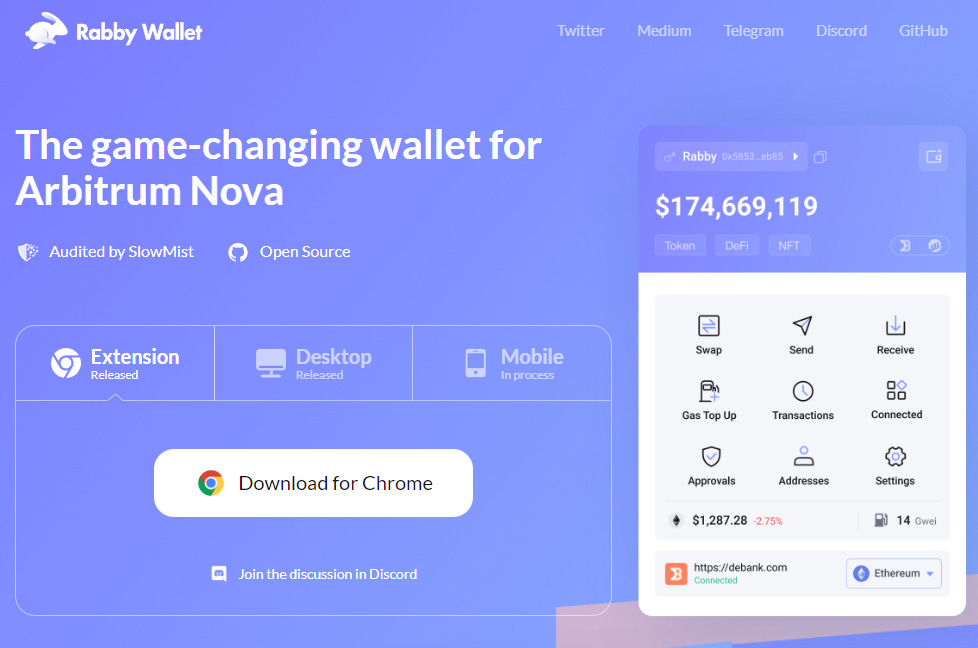
Rabby’s core strengths are practical. It supports multiple accounts, network switching, and hardware wallets such as Ledger. There’s transaction simulation and gas control that’s more intelligent than the defaults, which is huge when you’re on crowded networks. It also surfaces token approvals and lets you revoke or limit them per dApp, which prevents the classic "infinite allowance" problem that bites a lot of users. On balance, these features nudge people toward safer choices without being intrusive.
How I actually used Rabby (and why you might too)
I tried it with a few dexes and an NFT marketplace. At first the pop-ups felt familiar, but Rabby showed a clearer "who's asking" breakdown and highlighted riskier contract calls. Hmm... that little highlight saved me from clicking through an obscure approval that would've left an open allowance. Initially I only meant to test a swap; then I found and revoked an old approval in under a minute, which felt oddly satisfying. On the technical side, pairing my Ledger was straightforward—no gymnastics—and switching between accounts didn’t make me lose track of which wallet I was using (a surprisingly common UX fail).
My instinct said: this is a tool built for people who actually care about safety. On the other hand, if you’re a casual user who just wants to click a buy button, the extra prompts might feel annoying. Though—honestly—they’re the kind of annoyances that can save you thousands someday.
Check this out if you want to try it yourself: https://sites.google.com/cryptowalletextensionus.com/rabby-wallet-download/
When installing any wallet extension, do a few basic checks. Confirm the extension ID or publisher on the store page, verify the domain if you landed via a link, and never paste your recovery phrase into a web form. Also consider using a separate browser profile for DeFi activity (I do this; it's low effort and it reduces attack surface). These are low-friction steps that pay off.
Security notes, from someone who has learned the hard way
My first big mistake in crypto was treating all approvals as reversible. Not true. Some are permanent until you revoke them. So I started treating approvals like permissions in my house: who gets the key, and for how long? Rabby’s approvals UI makes that negotiation visible and reversible. That sounds small, but it changes behavior—people tend to grant less when the cost is visible. That’s the product design win here.
Also: beware phishing. Extensions can be spoofed. Seriously? Yes. Double-check the extension page, read recent reviews, and download from a trusted source. If a link arrives in a DM promising free tokens, treat it like hot coal. If you’re unsure about an approval, stop and search or ask someone (social groups are noisy, but often helpful).
Here's what bugs me about the ecosystem at large: too many wallets compete on bells and whistles while neglecting the tiny UX nudges that prevent burnout and theft. Rabby leans into those nudges. It’s not perfect, but it’s one of the more sensible choices out there right now.
Practical tips for using Rabby day-to-day
Keep it compartmentalized. Use separate accounts for trading, swaps, and long-term storage. Back up your seed phrase offline and consider a hardware wallet for large balances. Use the revocation tools—make a habit of checking allowances every few weeks. If you use multiple browsers or devices, label accounts clearly so you don’t mix test funds with main funds (been there, cried about it).
One neat trick: create a low-balance "spender" account for everyday dApp interactions, and keep the bulk in a cold wallet. Transfers between them are easy and the risk surface shrinks. It’s not exotic, but it works—and Rabby makes the transfers and approvals more transparent so you’re less likely to fat-finger something.
FAQ
Is Rabby Wallet safe?
Rabby adds security-focused features that reduce user error, like clear approval UIs and hardware wallet integration; however, no extension is immune to browser-based risks, so combine Rabby with good habits and, for large holdings, a hardware wallet offline.
How do I install Rabby?
Visit the official download page linked above and follow the browser-specific instructions. Verify the publisher and extension ID, read permissions, and start with a small amount to test the flow before moving larger sums.
What if I miss a malicious approval?
Revoke allowances immediately using Rabby’s revoke tool (or on-chain tools), move affected funds to a safe wallet, and consider alerting community channels. Prevention is easier than recovery—so pre-emptive hygiene matters.